Pierre Allain & Léonie Guyer
Amplitude
10.01.2026 — 07.03.2026Paris
Materials: Exhibition text, Checklist
Press: Mousse Magazine
Gut Visions: An Amplitude
Without cutting the body open, ichthyologists turn fish flesh transparent to reveal its internal anatomy. To keep the fish “intact,” its flesh is digested by enzymes, while its bone is stained red and cartilage blue. One could identify its species clearly, or in the case of male seahorses, that they carry eggs and give birth to the young.
Seahorses belong to the genus of hippocampus, which lends its name to the vertebrates’ vital brain structure, that is shaped like a seahorse. In humans, the hippocampus, part of the limbic system, is critical for the coding of episodic, short-term, working memory and spatial navigation and long-term memory.
Tending towards the enzymatic, Pierre Allain and Léonie Guyer’s works catalyze an infrared wayfinding, and a coalescence of impressions, sensations, and desires. Their coming together is akin to the unfolding movement of a paper’s fold. Or the radiating out of infinite reflection once withheld in a clasped double mirror. Or it’s a pathway into an inversive coulisse, the space between a stage set’s flat scenery panels, typically hidden from the public. The coulisse is also a movable object that slides in an invisible track (shutter, sliding door, drawer runner, drawstring waistband of trousers). In music, the coulisse (“slide” in French) is a trombone part that glides up and down to control its pitch. Allain and Guyer swerve the coulisse askew, showing their tracks.
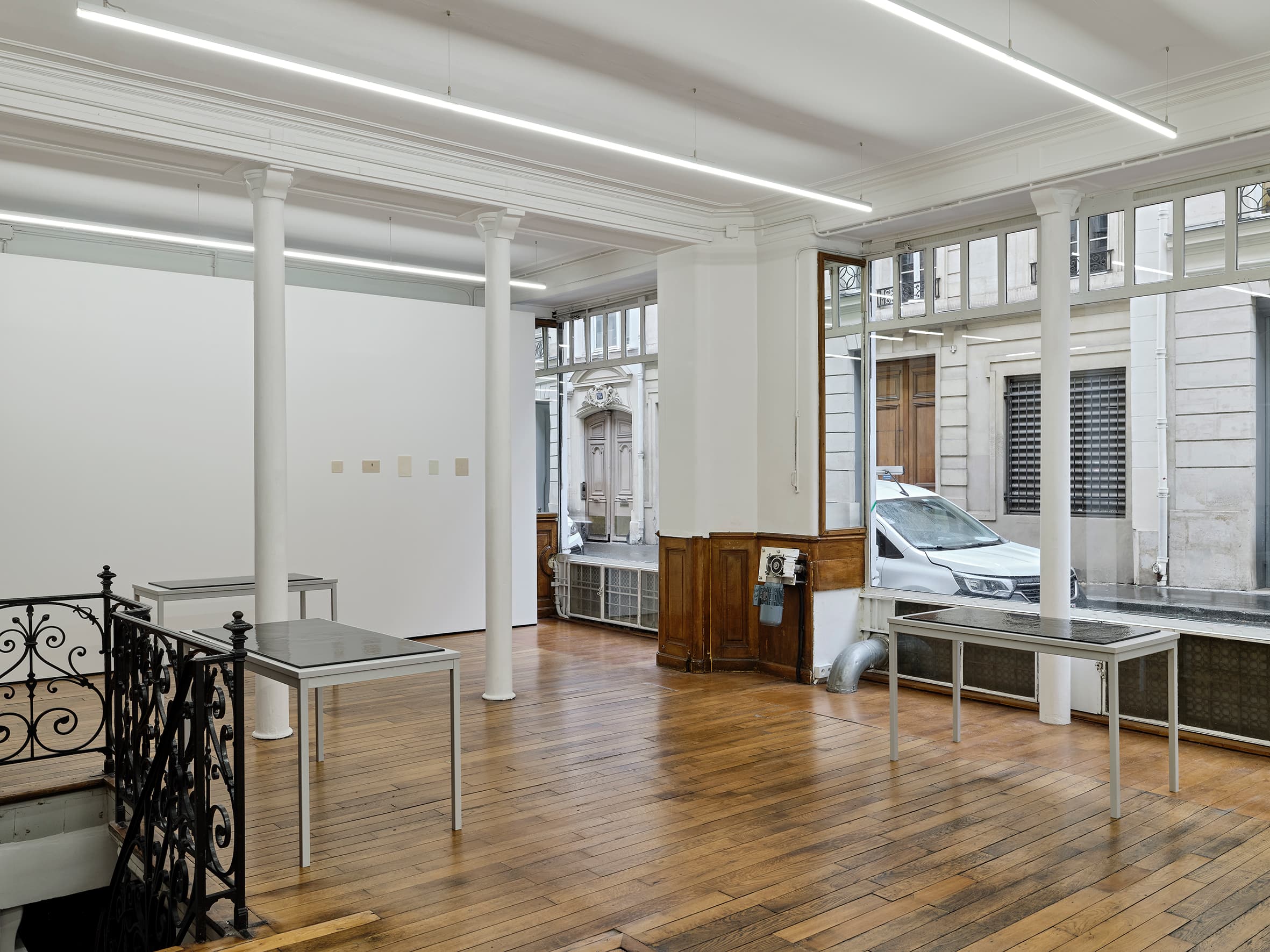
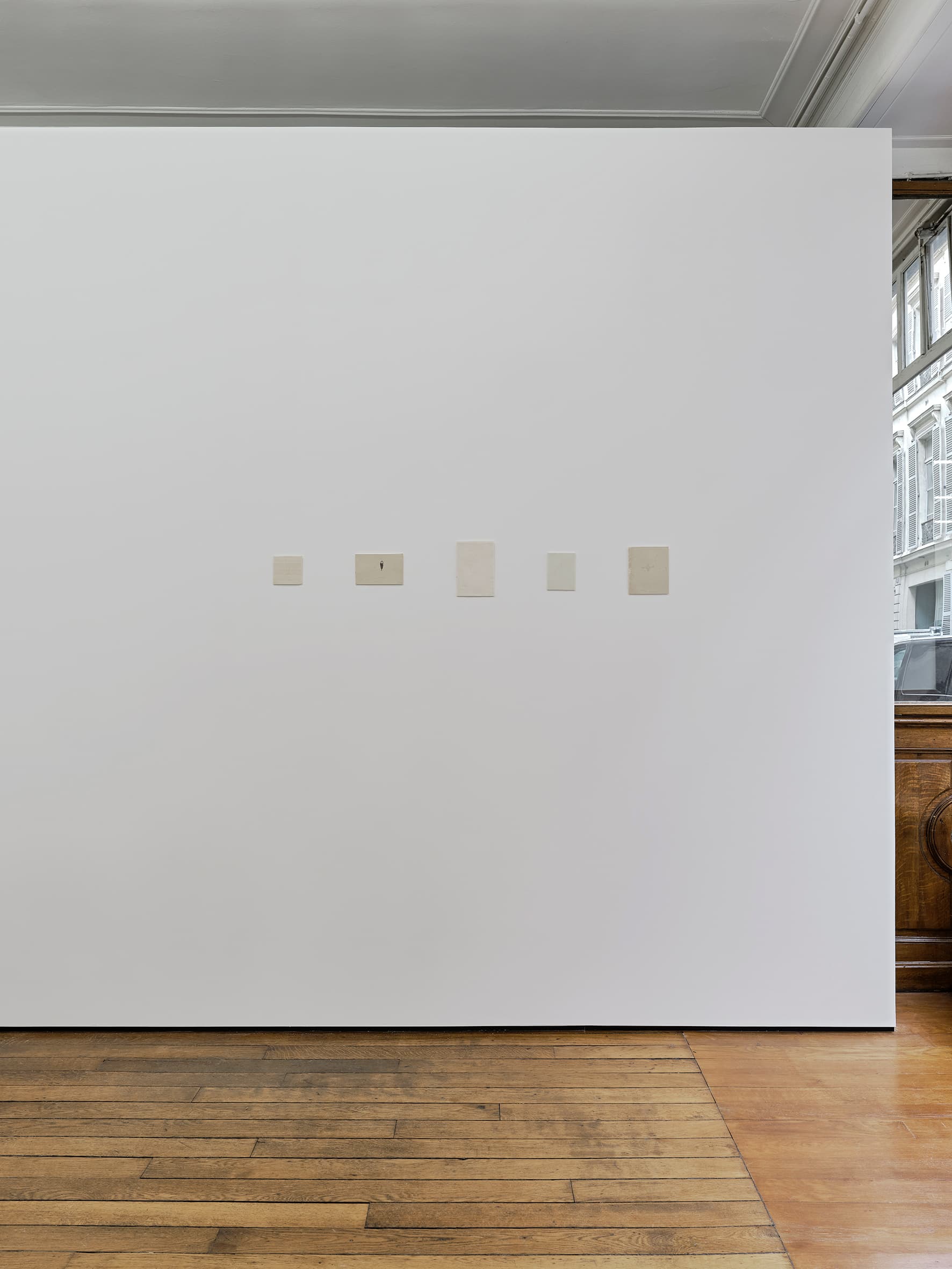
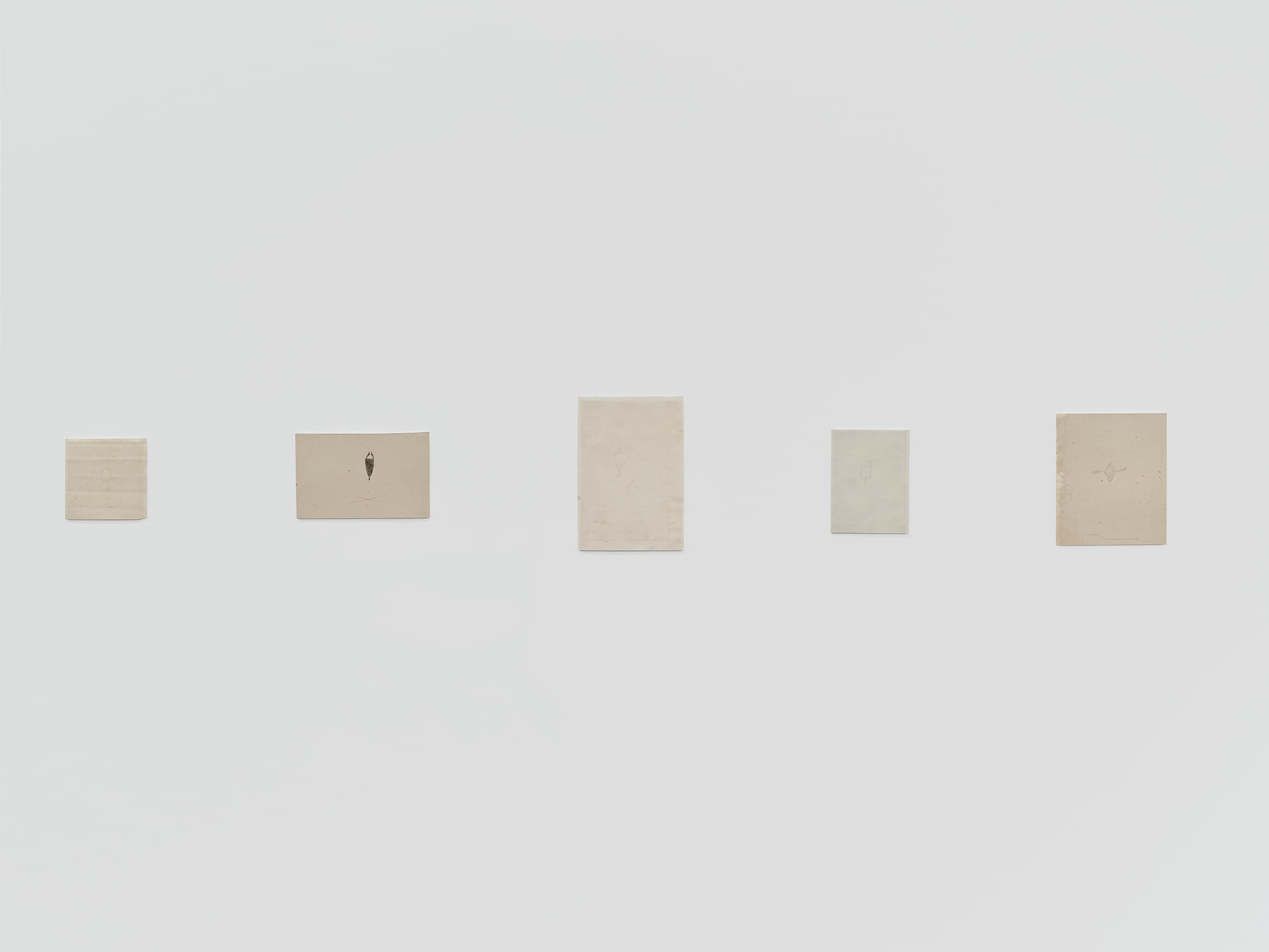
Drawings, on paper, and on the architectural planes of walls, Léonie Guyer’s works are propositions of ever-evolving matter. Tendriled, propulsive, these forms are motile, like cells and gametes capable of motion. Transformation attuned with dissipation as a given. These crest soul lines, vapor crystalline things, in sanguine and graphite, course like vein. Vibrational lines in space. Volumetric embrace. Drawings as incisions, routing a route into the substrates of paper, across decades and centuries. The papermakers’ hands form a communal fold in time. Guyer’s steadfast hand movement, at the scale of human time, reaches, in light of the geologic time of the paper, a mind wall.
Each drawing is simultaneous levitation and a grounding, shimmering between embodiment and void. Watercolor as temporal tectonic plates, and void-filled contours as membranic receiving chambers. Lately, some radical acts enter this internal architecture: a single line, horizontal or vertical; two lines, forming a right angle or a perspectival “x”; and a curved variation (perhaps a hippocampus), as incisions into another spacetime.
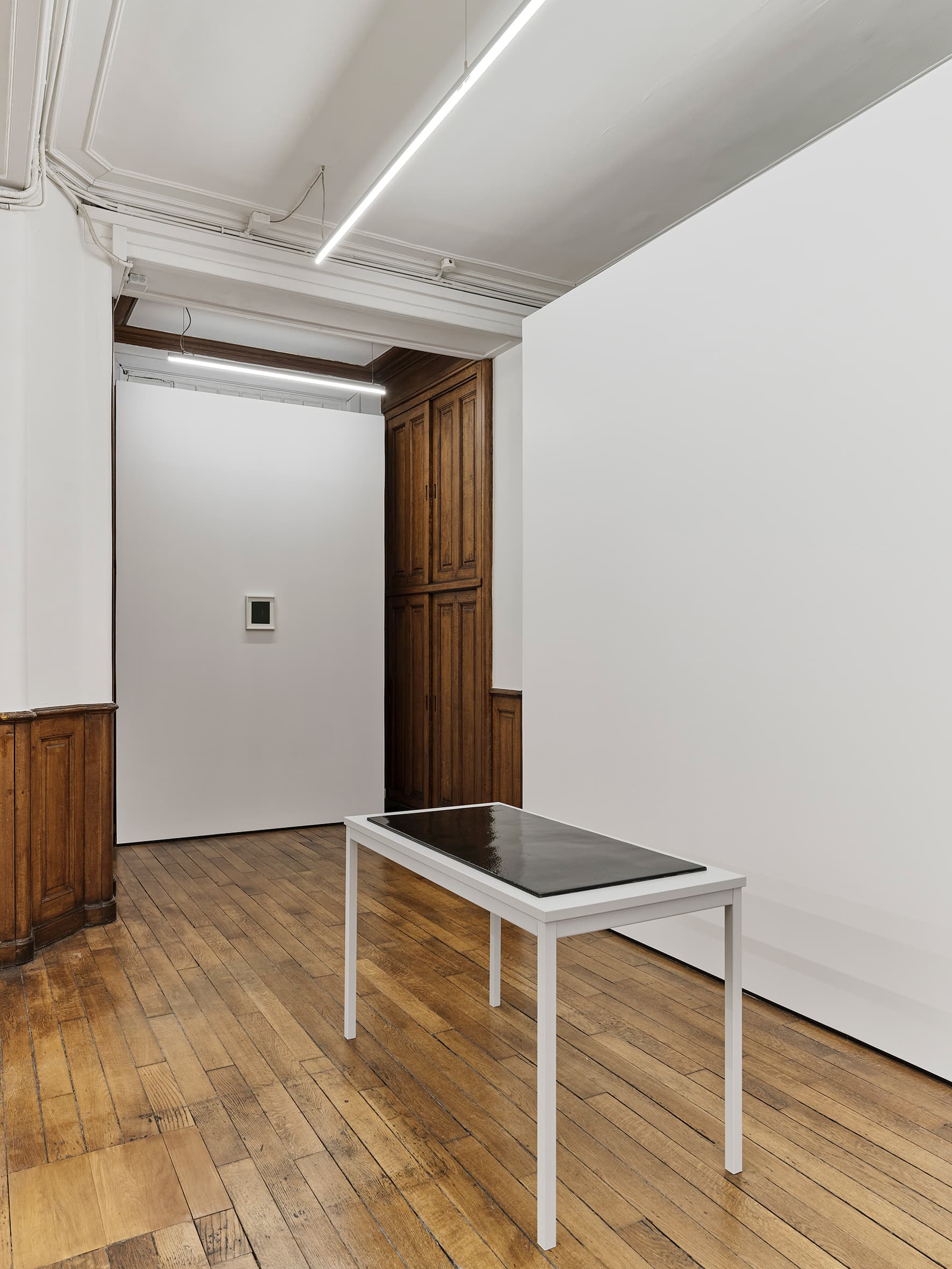
Pierre Allain’s work ensconces a muteness that holds within it an expanse, that articulates through subterranean vocalizations (like the murmuring of speaking under one’s breath, and speaking within one’s mind). Regulated like breathwork, through variant speeds, sometimes collating, sometimes shuttling, sometimes doubling, sometimes cancelling out. Between intertwinement and contradiction, between the container and the contained. Hot breath on a cold object that transforms and vanishes. The forever record of a brief touch. A halting susurration. See-through bodies and see-through histories. A trio of receptive corpus: a pair of steel tables and a larger third, recalling administration and those used in laboratories and the pharmaceutical industry, each supports a steel sheet coated with sound dampening material that reduces reverberation. These horizontal substrates are further coated with glossy black paint that absorbs while reflecting light.
Threading through this atmospheric relay of absorption and reflection, a bassline emanates from the basement. A sustained note of a viola da gamba gut string hums. Legs open, the body in the x position, as the central string is struck. The instrument’s vibrational line in space cusps the vibrational line in the space. Recalibrating the axes. To contact the barely invisible, barely bodies, barely thresholds.
The barely reverbs.
Bone-scaffold radiates a life force, a vision from the gut of the coulisse, an amplitude.
– Jo-ey Tang
Pierre Allain (b. 1998, Nantes) is based in Paris. Recent exhibitions include Petrine, Düsseldorf (2025); 15th Kaunas Biennial (2025); Diana, Milan (2025); No Name, Paris (2025); CAPC, Musée d’art contemporain de Bordeaux (2024); Cherry Hill, Cologne (2024); Petrine, Paris (2023); Frac Île-de-France, Romainville (2023); Frappant e.V., Hamburg (2023); 67e Salon de Montrouge (2023); Galerie Tator, Lyon (2023); CAP Saint-Fons, Saint-Fons (2022); Kunstverein Bielefeld, Bielefeld (2022).
Léonie Guyer (b. 1955, New York) lives and works in San Francisco. Selected exhibitions include CCA Wattis Institute for Contemporary Arts; UC Berkeley Art Museum and Pacific Film Archive; staircase gallery, San Francisco; odium fati, San Francisco; 2nd Floor Projects, San Francisco; Bibeau Krueger, NYC; Feature Inc., NYC; Peter Blum Gallery, NYC; Greg Kucera Gallery, Seattle, WA; Douglas F. Cooley Memorial Art Gallery, Reed College, Portland, OR; lumber room, Portland, OR; The Shaker Museum | Mount Lebanon, NY; Gallery Joe, Philadelphia; Mills College Art Museum, Oakland; PLUSkunst, Düsseldorf, Germany and other venues.
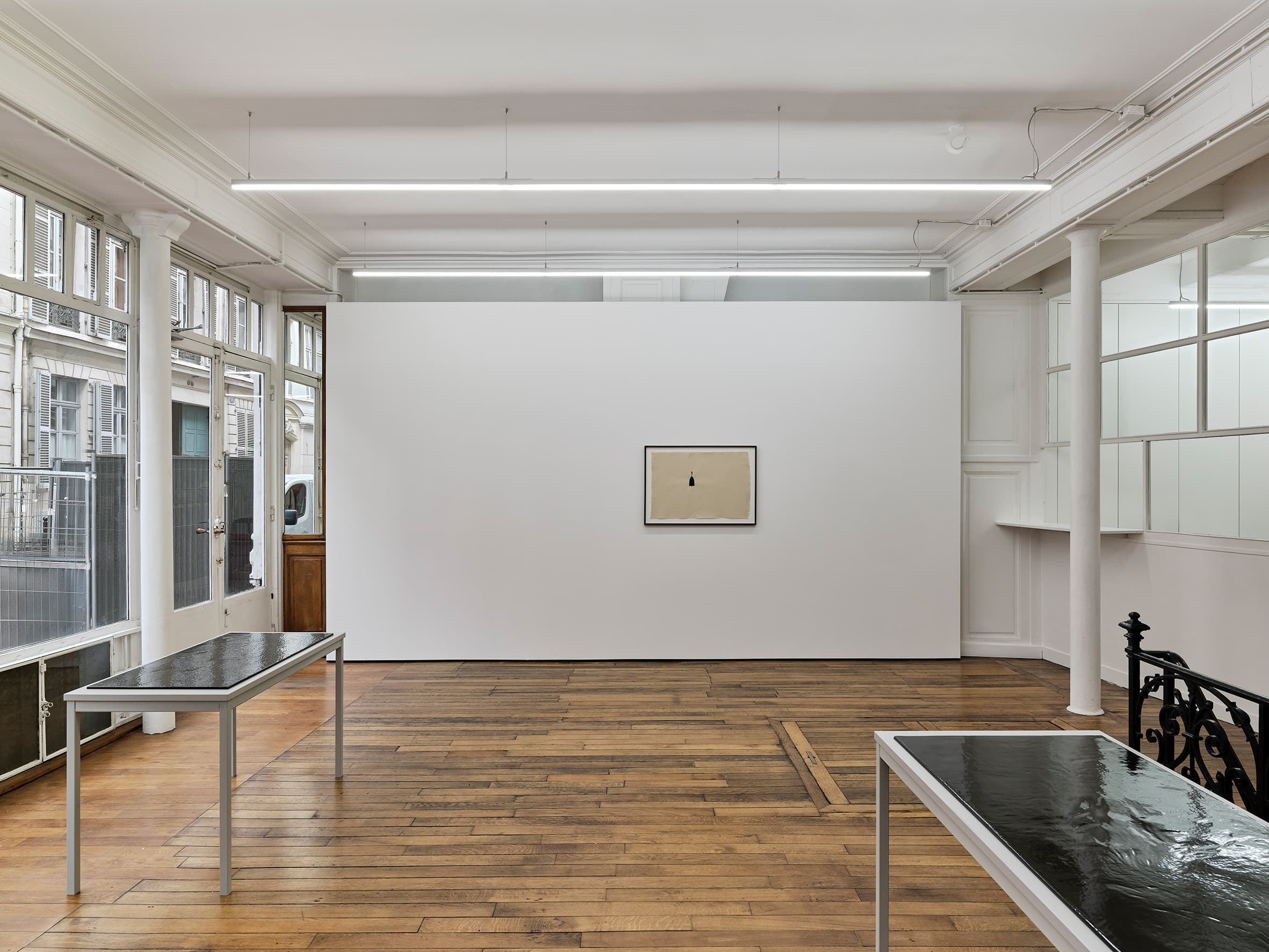
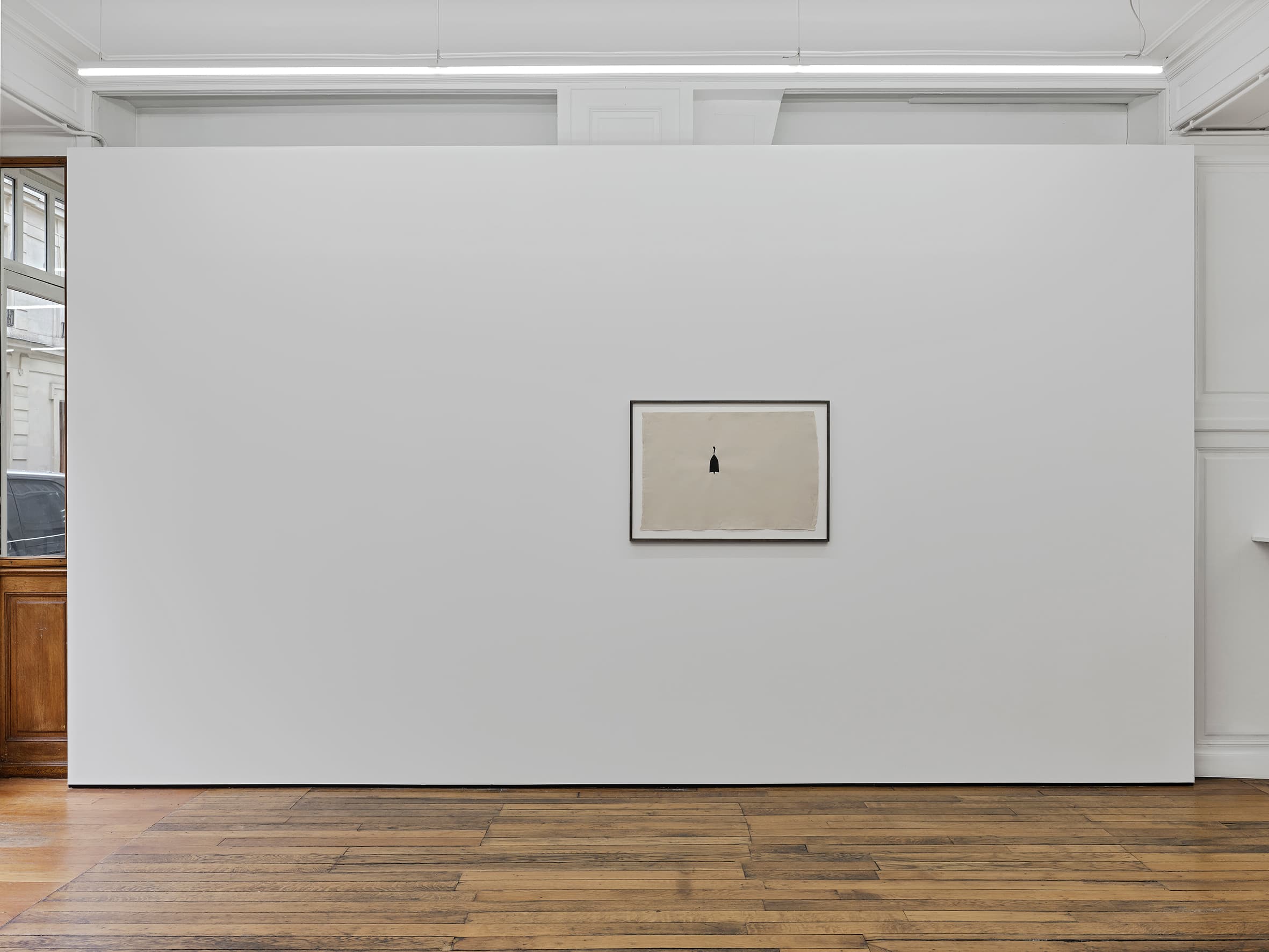
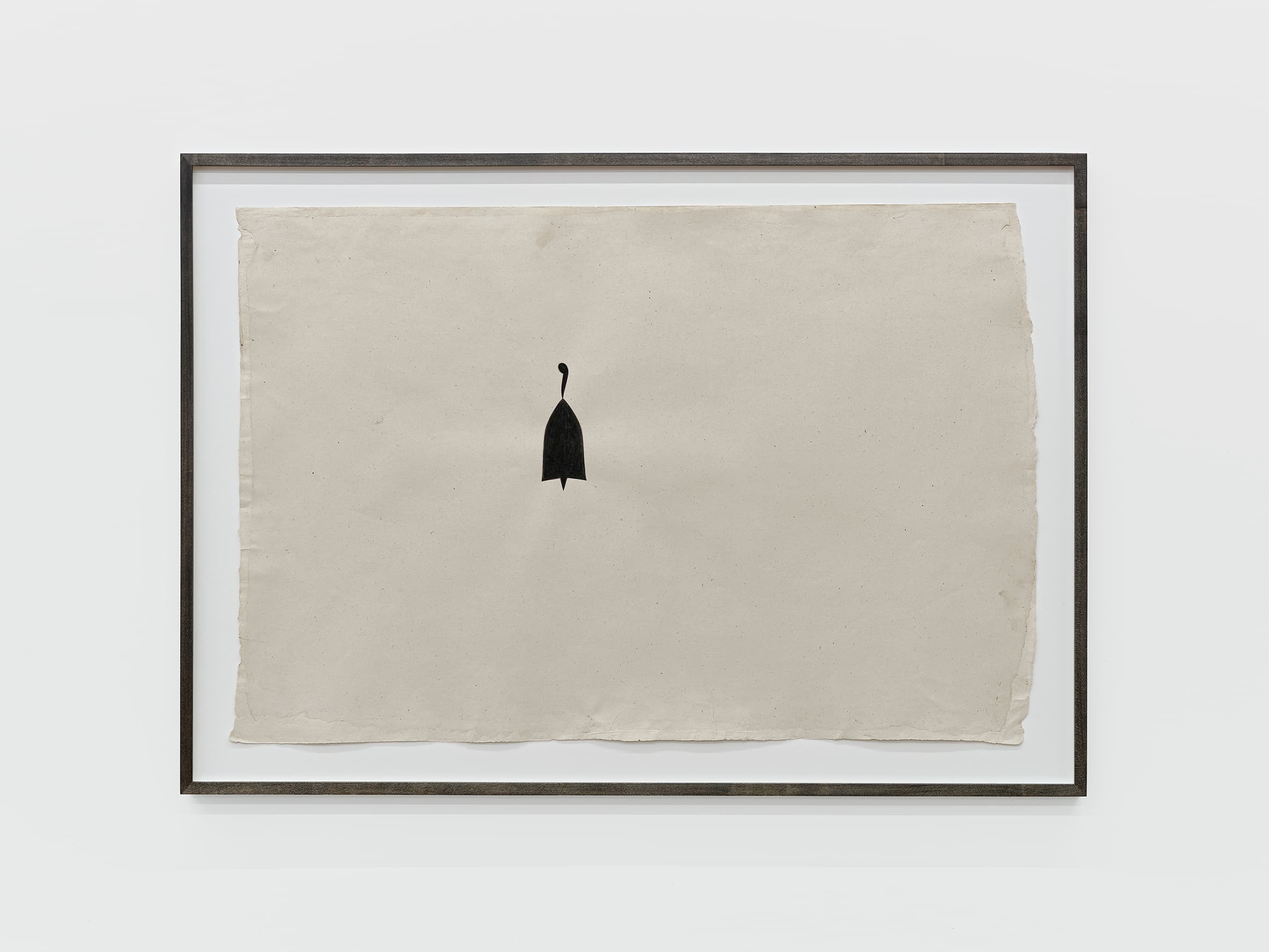
Léonie Guyer
Untitled, MHK-10, 2019
gouache and colored pencil on agate-burnished double-weight Indian jute paper
55.2 x 85.7 cm, 65.8 x 93.2 cm (framed)
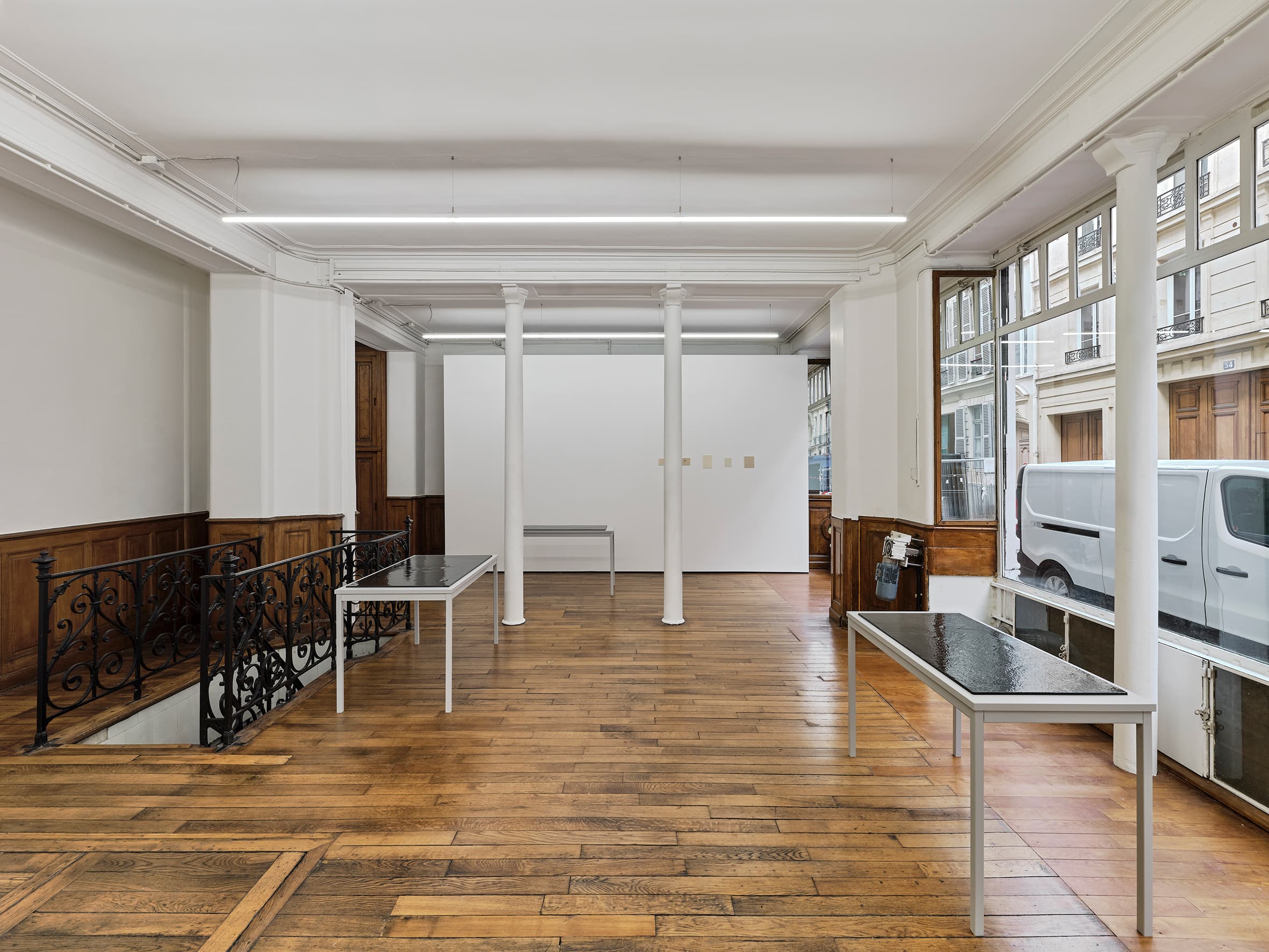
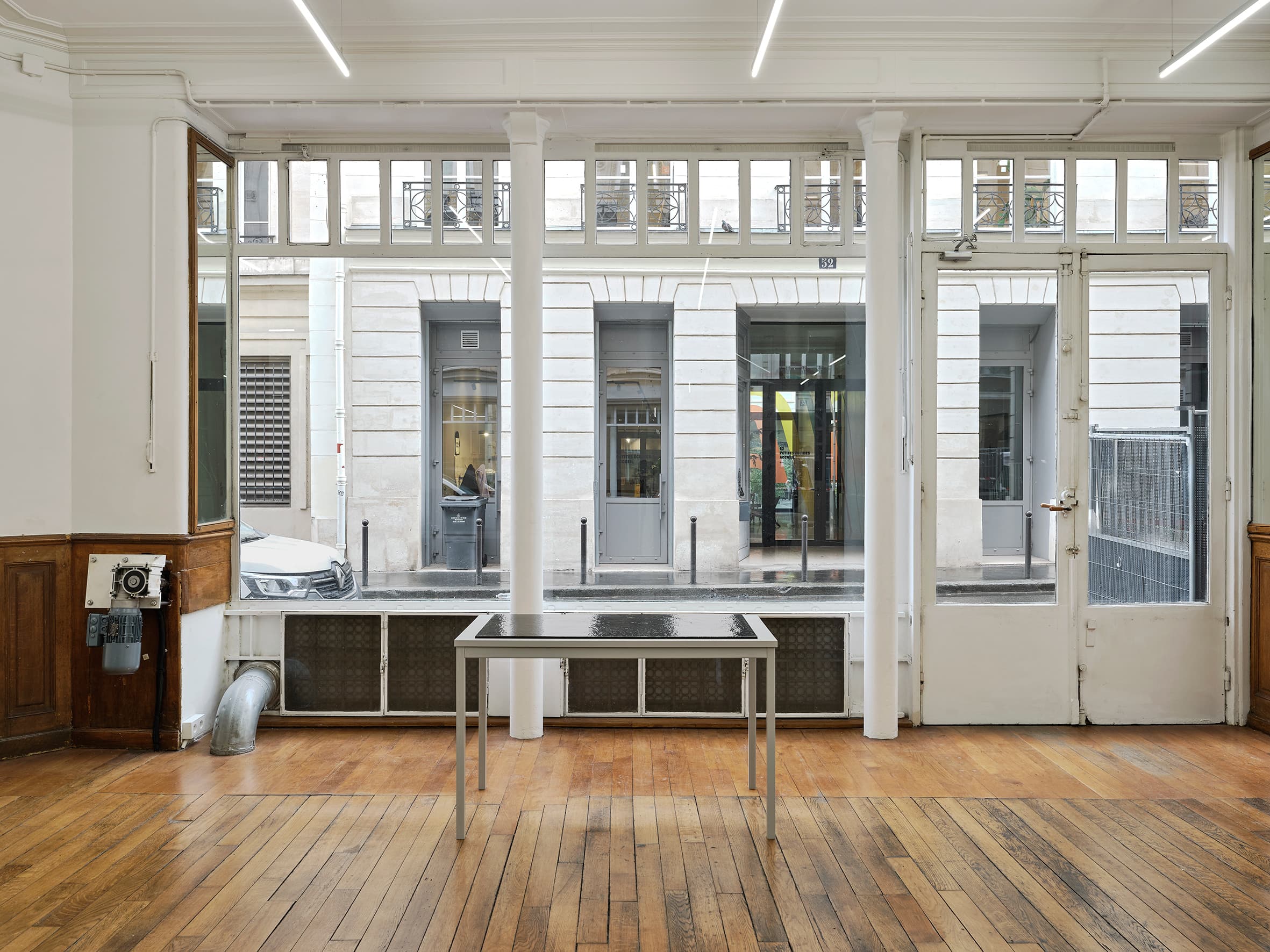
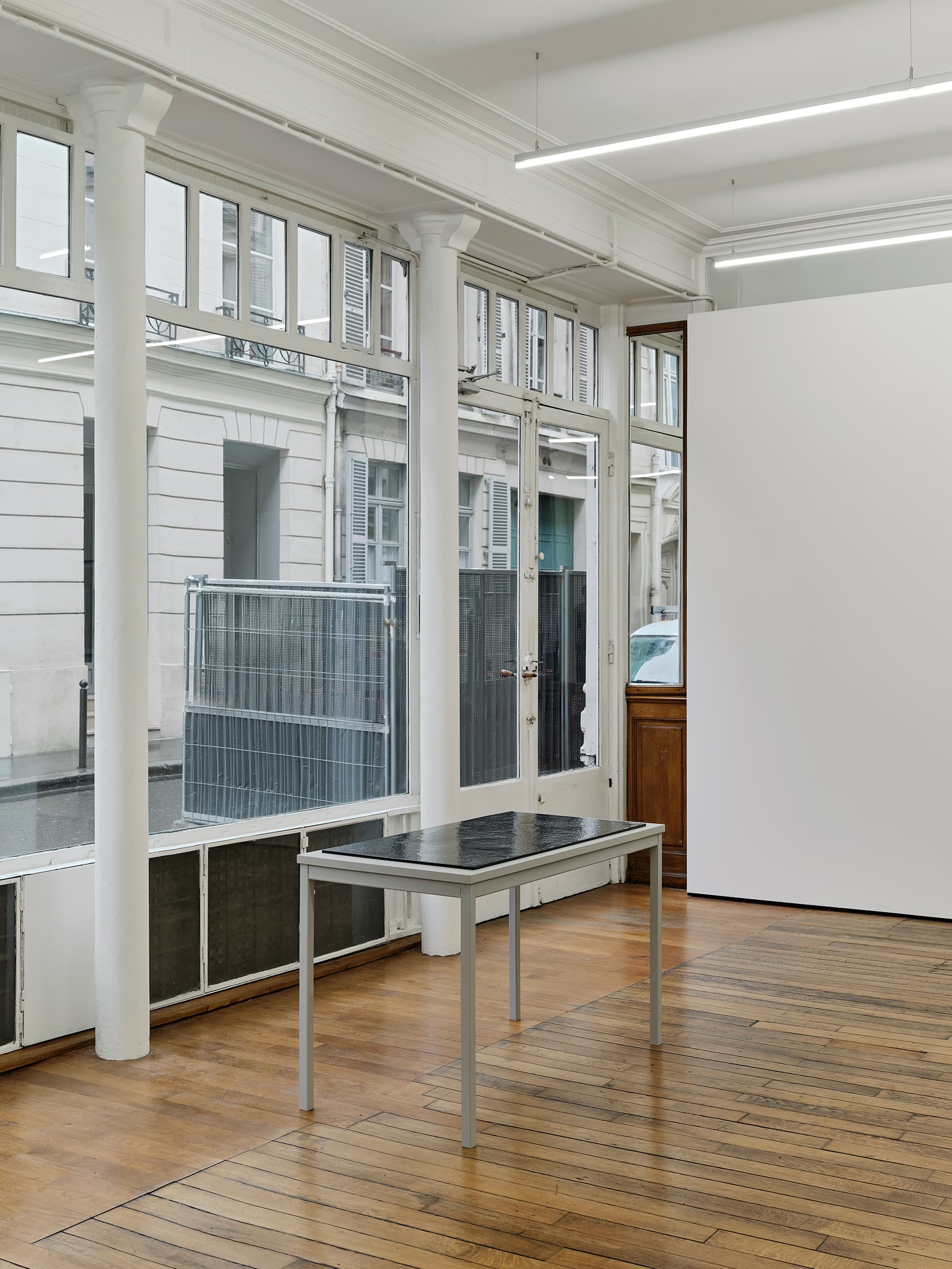
Pierre Allain
Chamber (I), 2026
sound deadening coating, paint, steel, table
63 x 126 x 0.8 cm / 70 x 140 cm x 75 cm
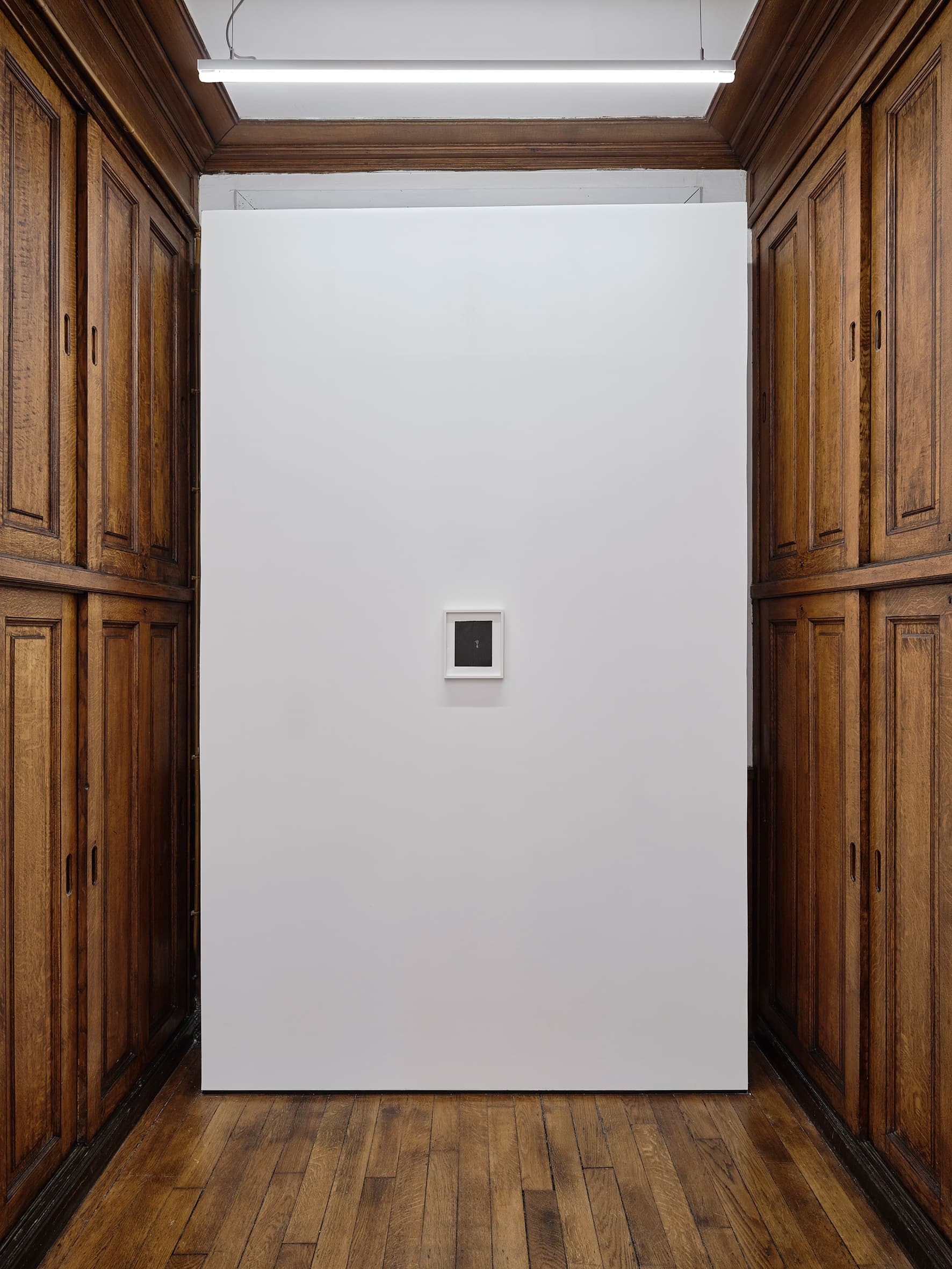
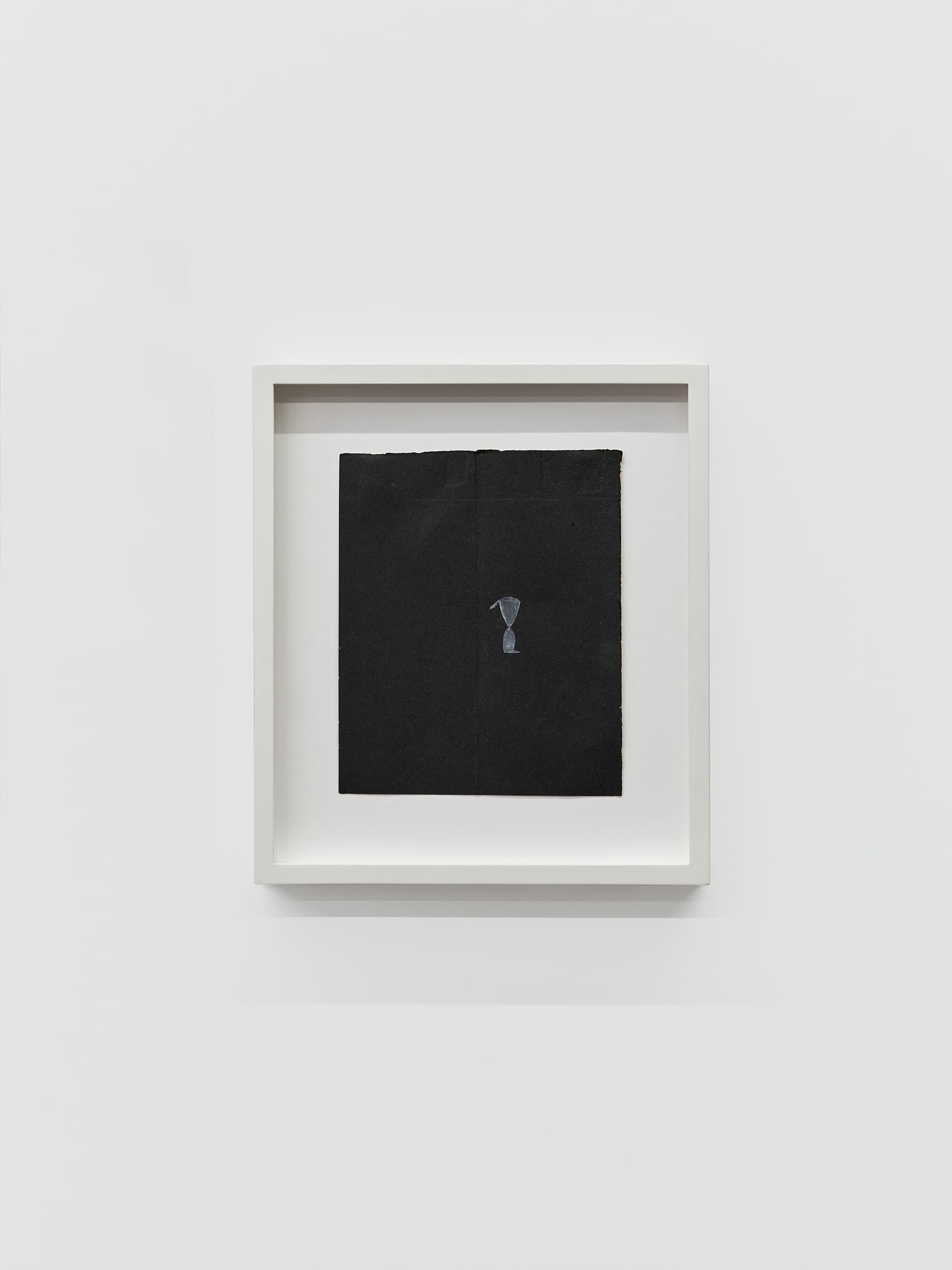
Léonie Guyer
Untitled, OBP-14, 2019
gouache on 19th century endpaper
15.5 x 12.7 cm, 23 x 20 cm (framed)
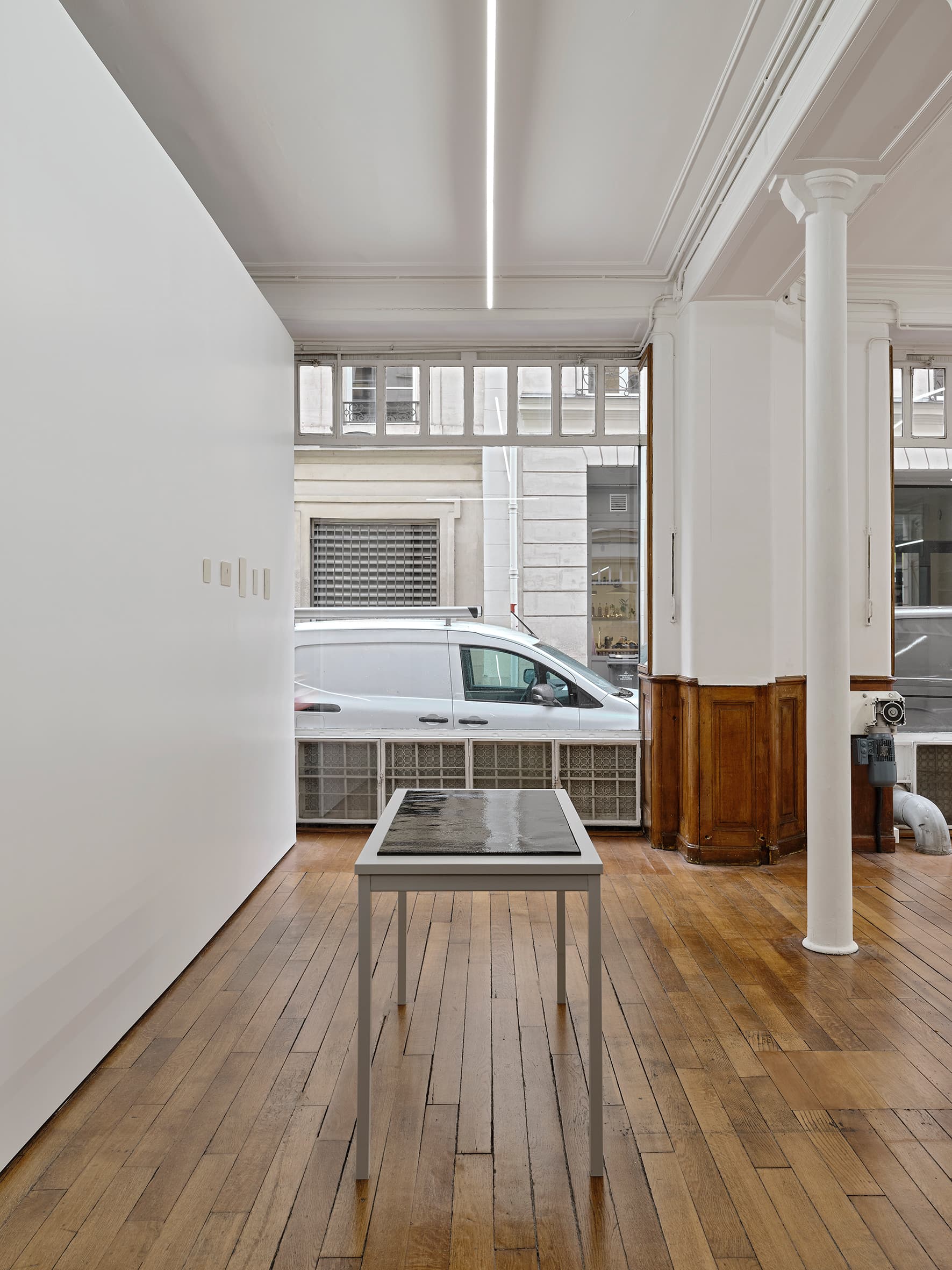
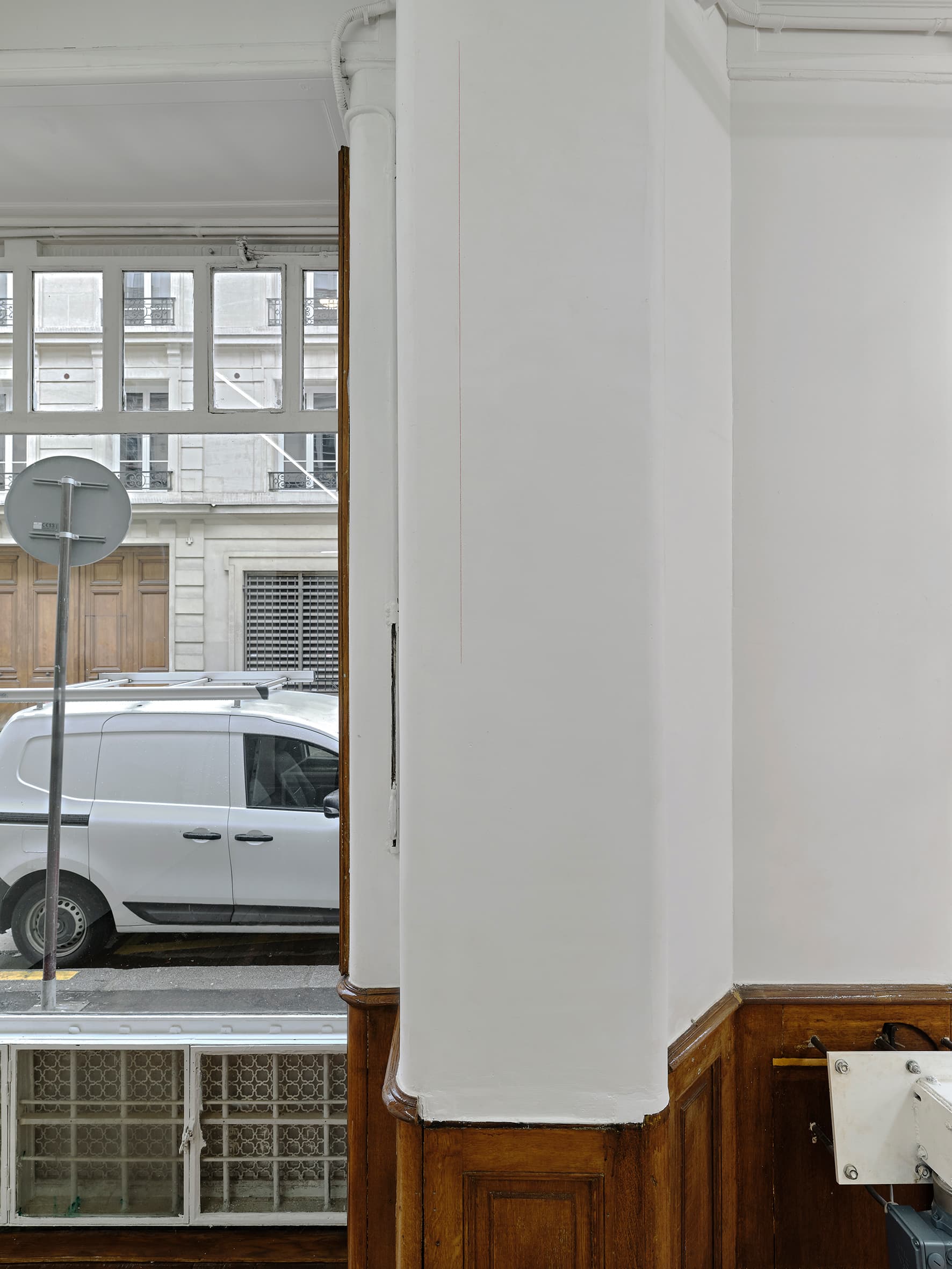
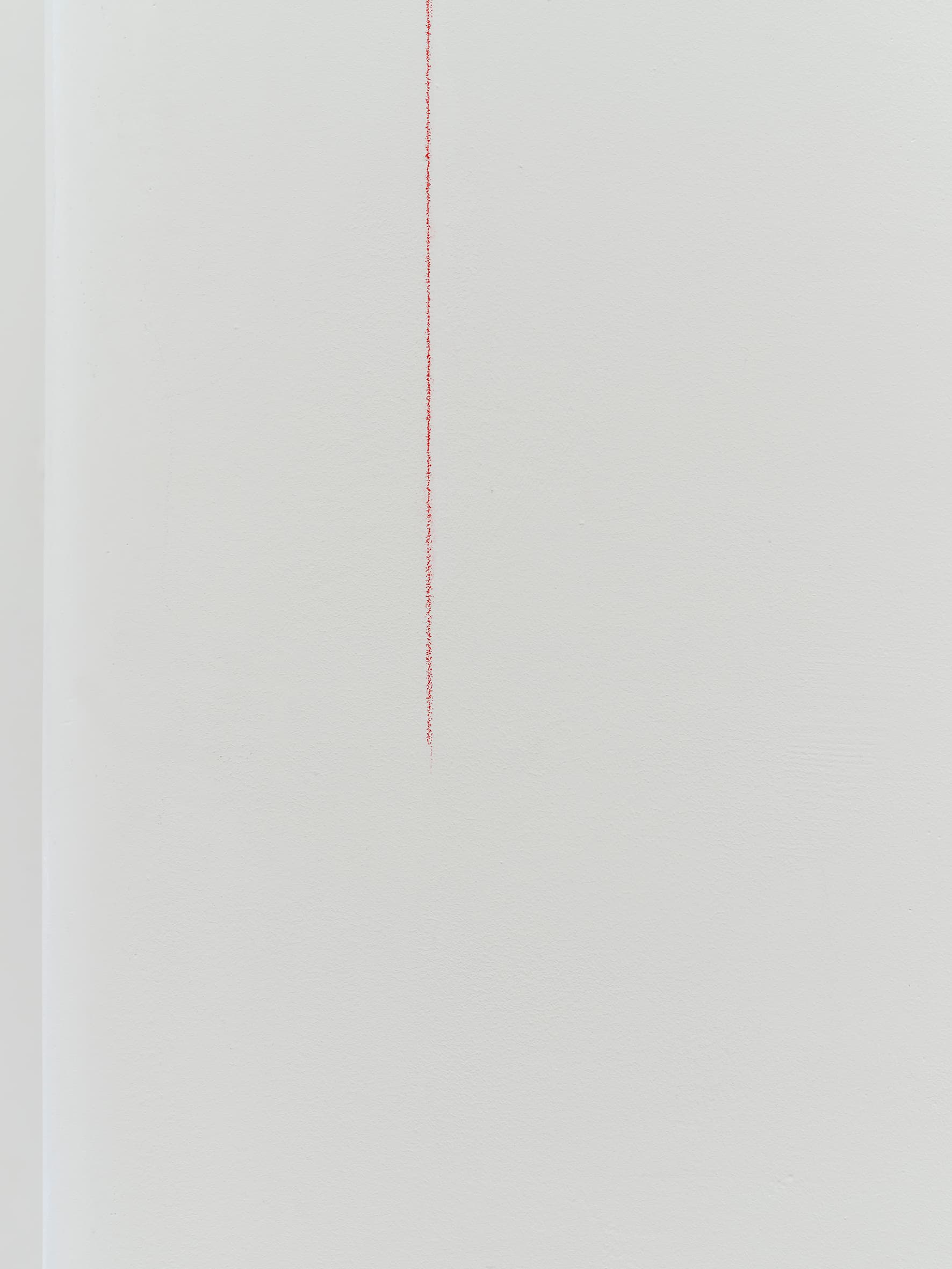
Léonie Guyer
Untitled (North), 2026
colored pencil on wall
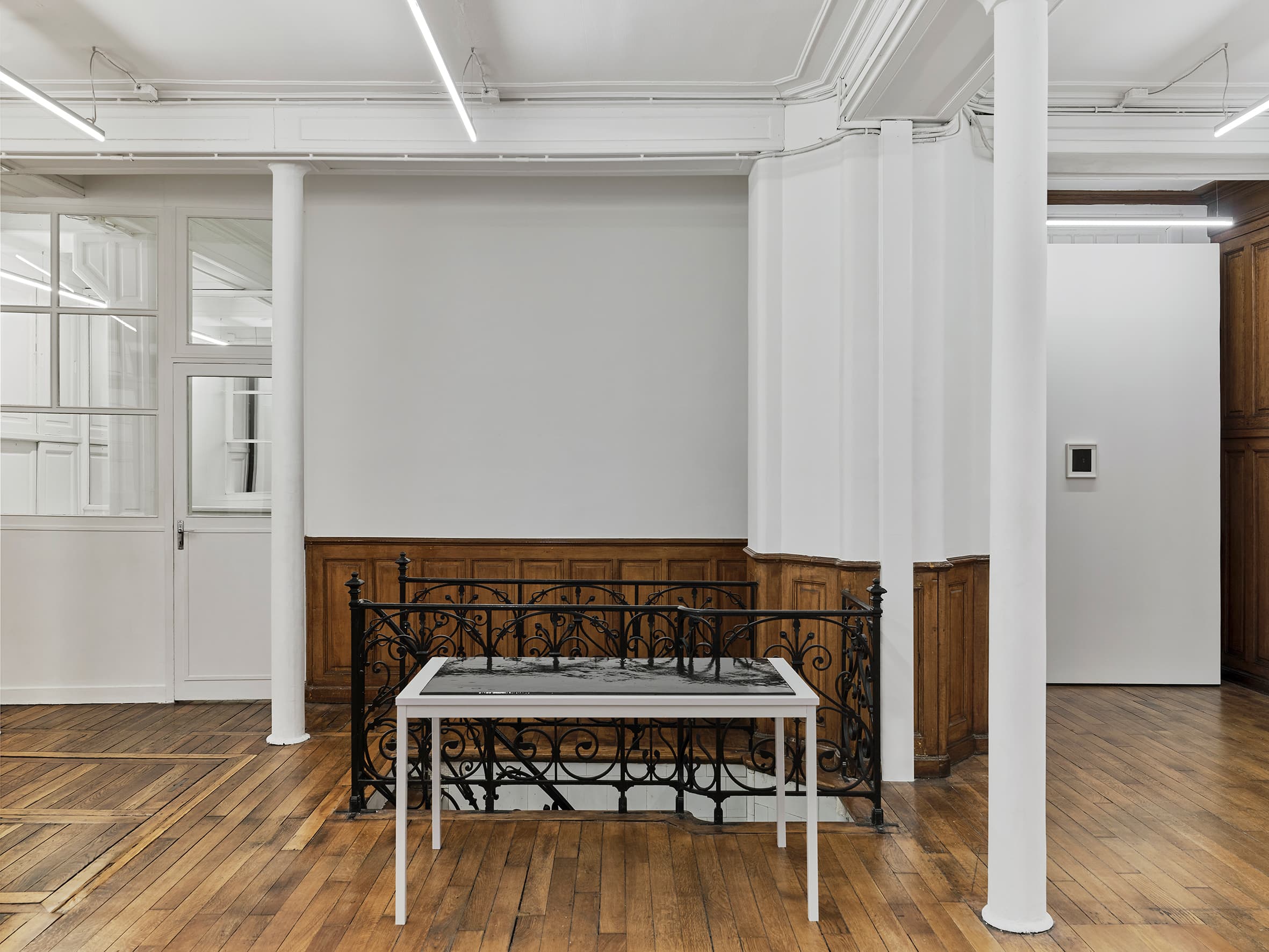
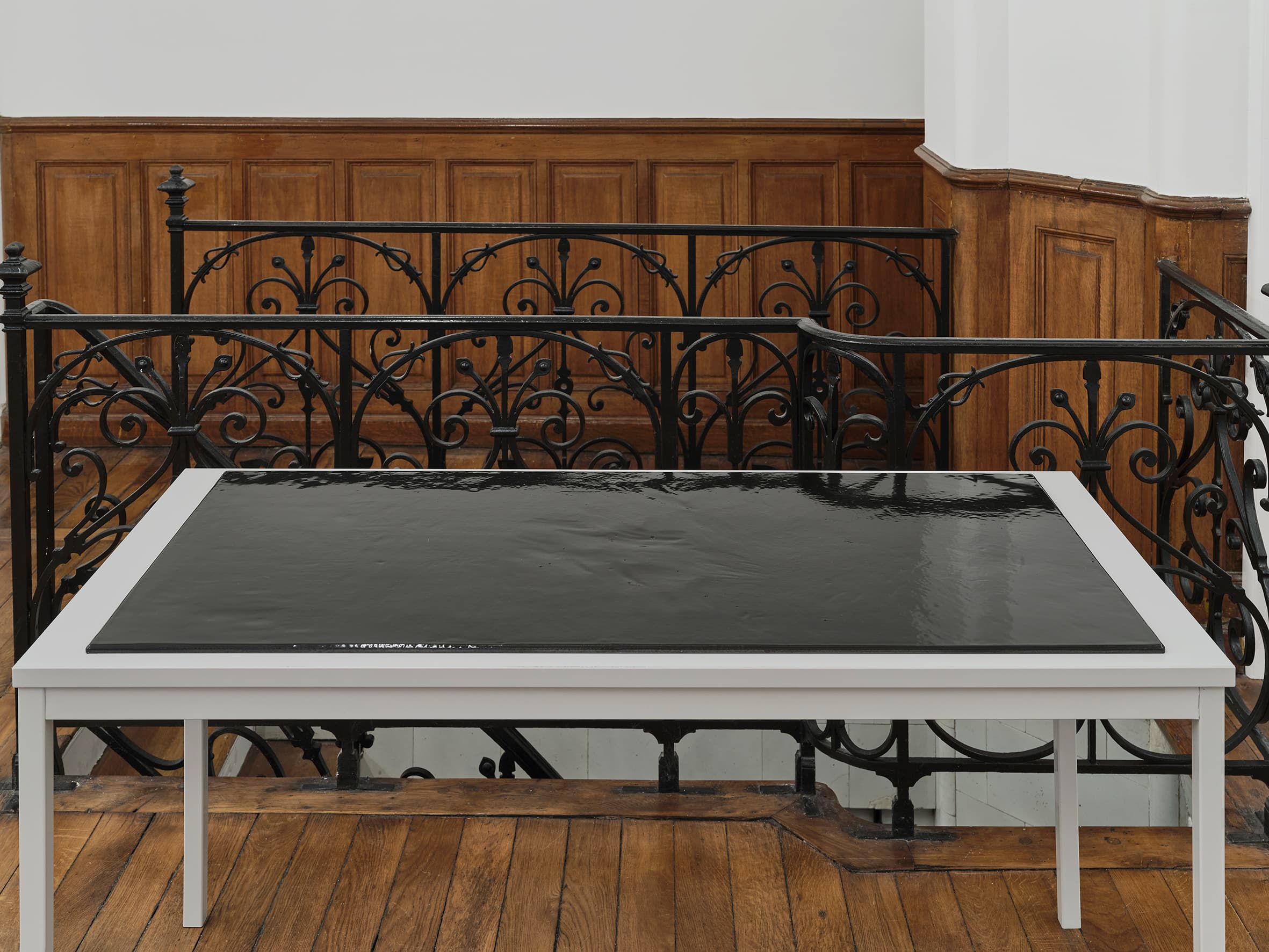
Pierre Allain
Chamber (II), 2026
sound deadening coating, paint, steel, table
63 x 126 x 0.8 cm (steel) / 70 x 140 cm x 75 cm (table)
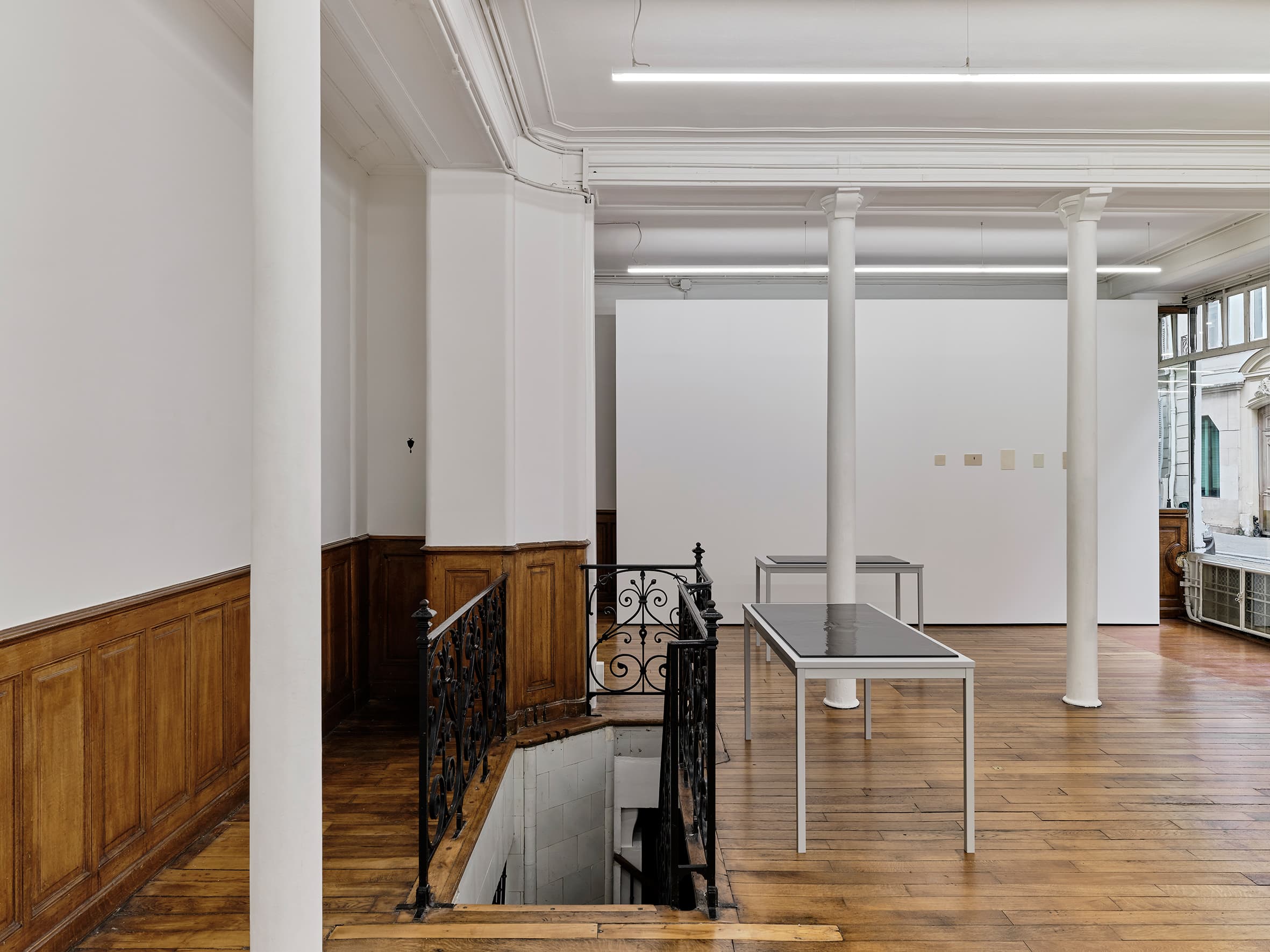
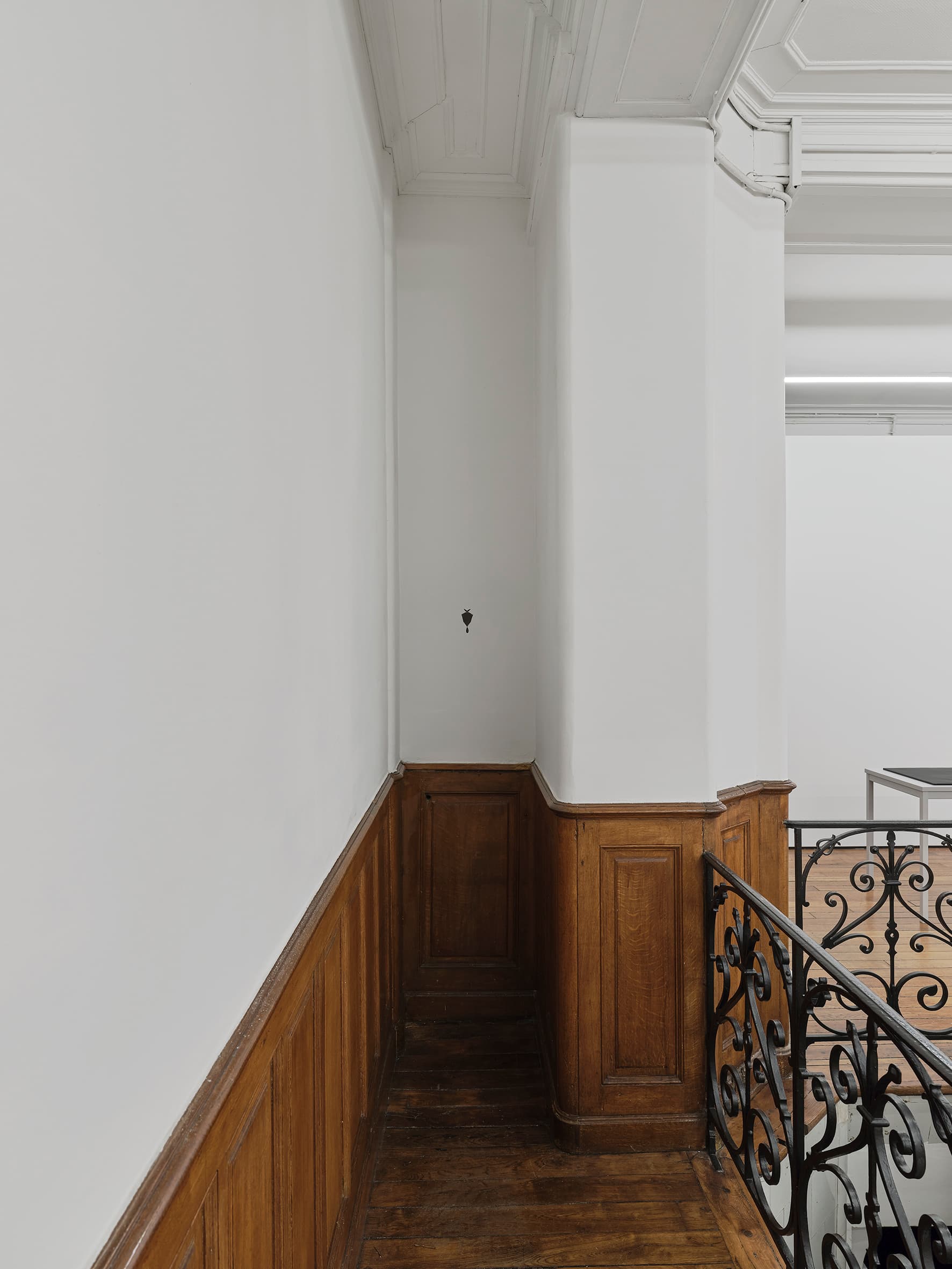
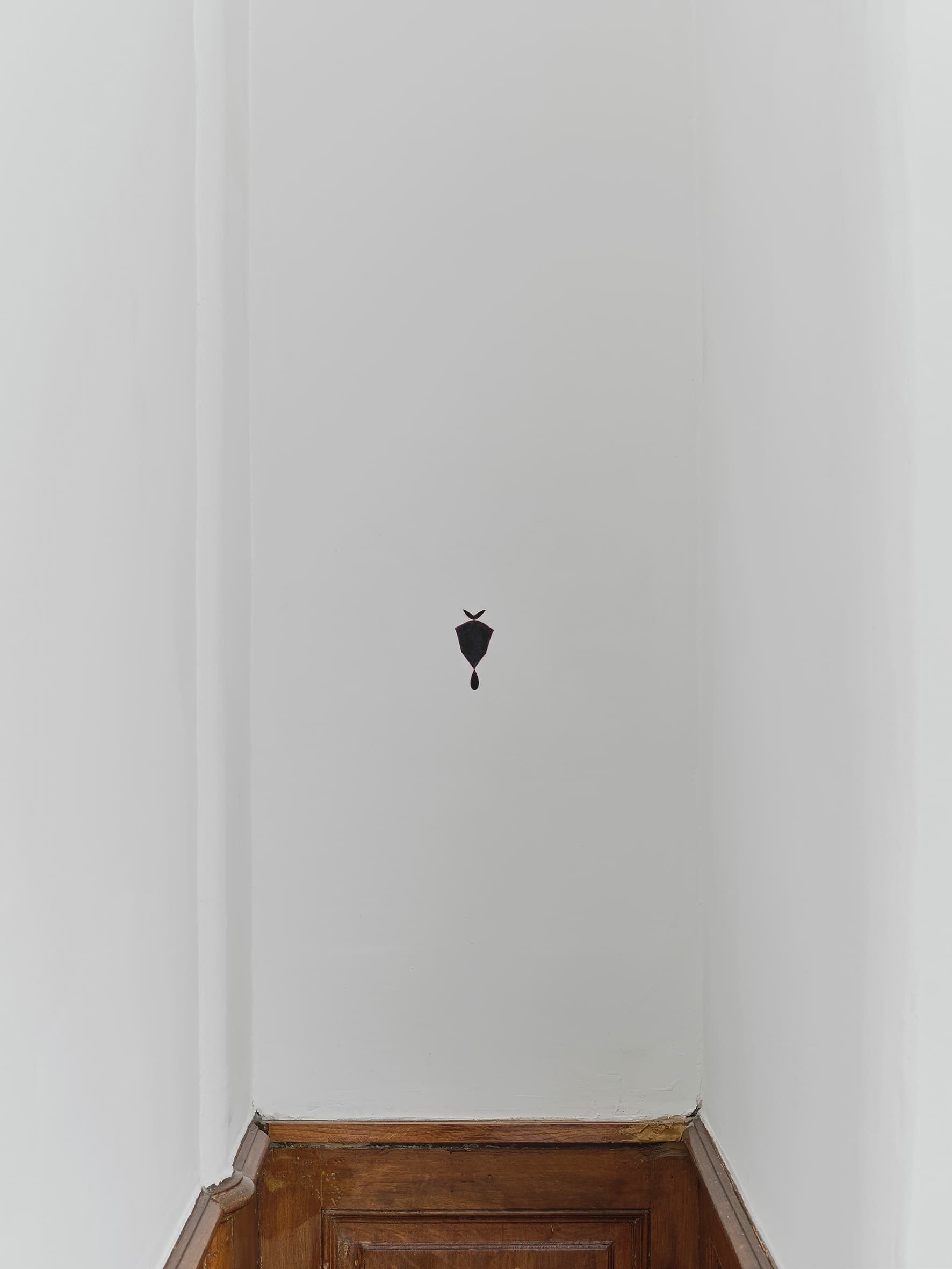
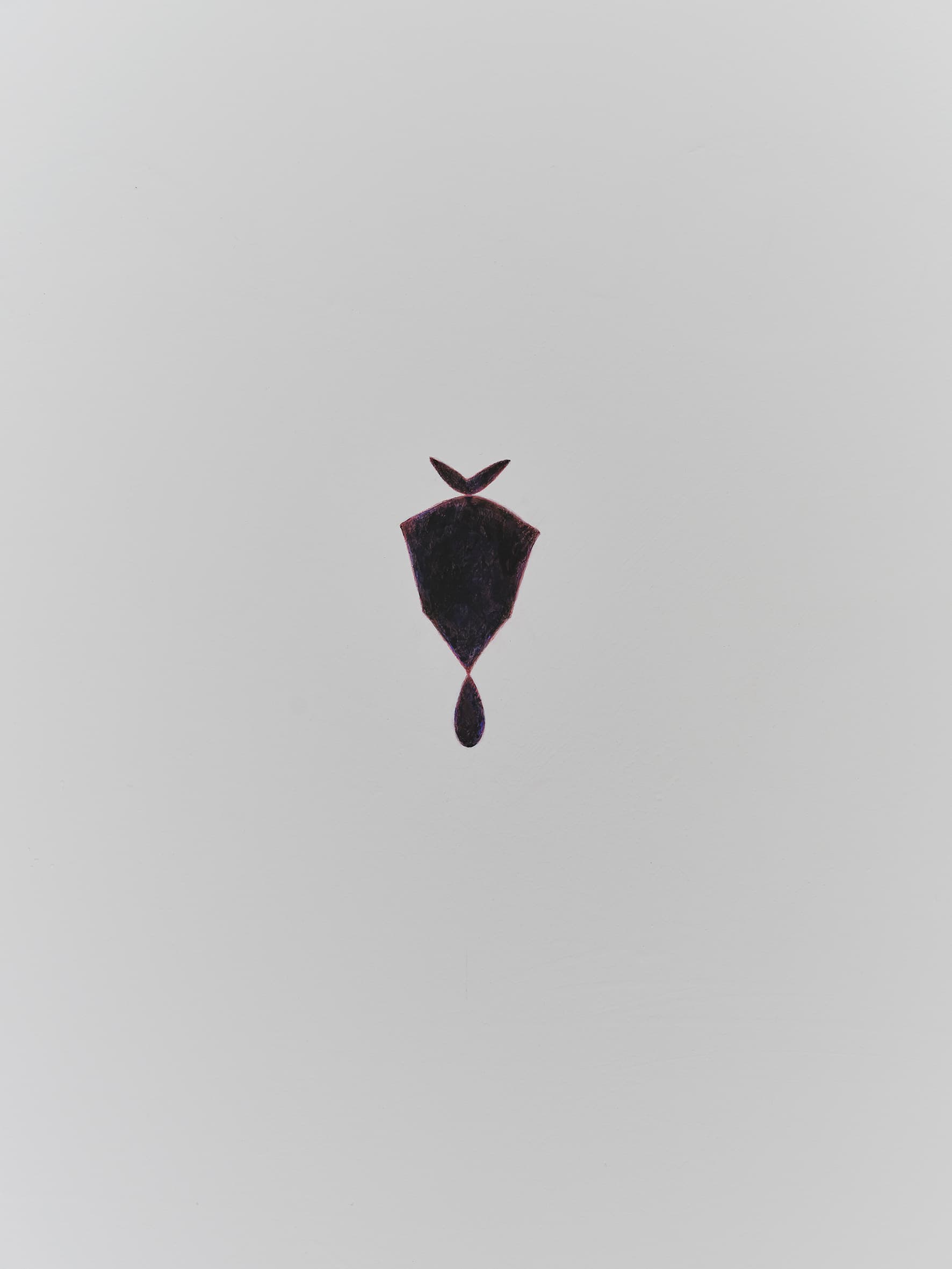
Léonie Guyer
Untitled (West), 2026
gouache and colored pencil on wall
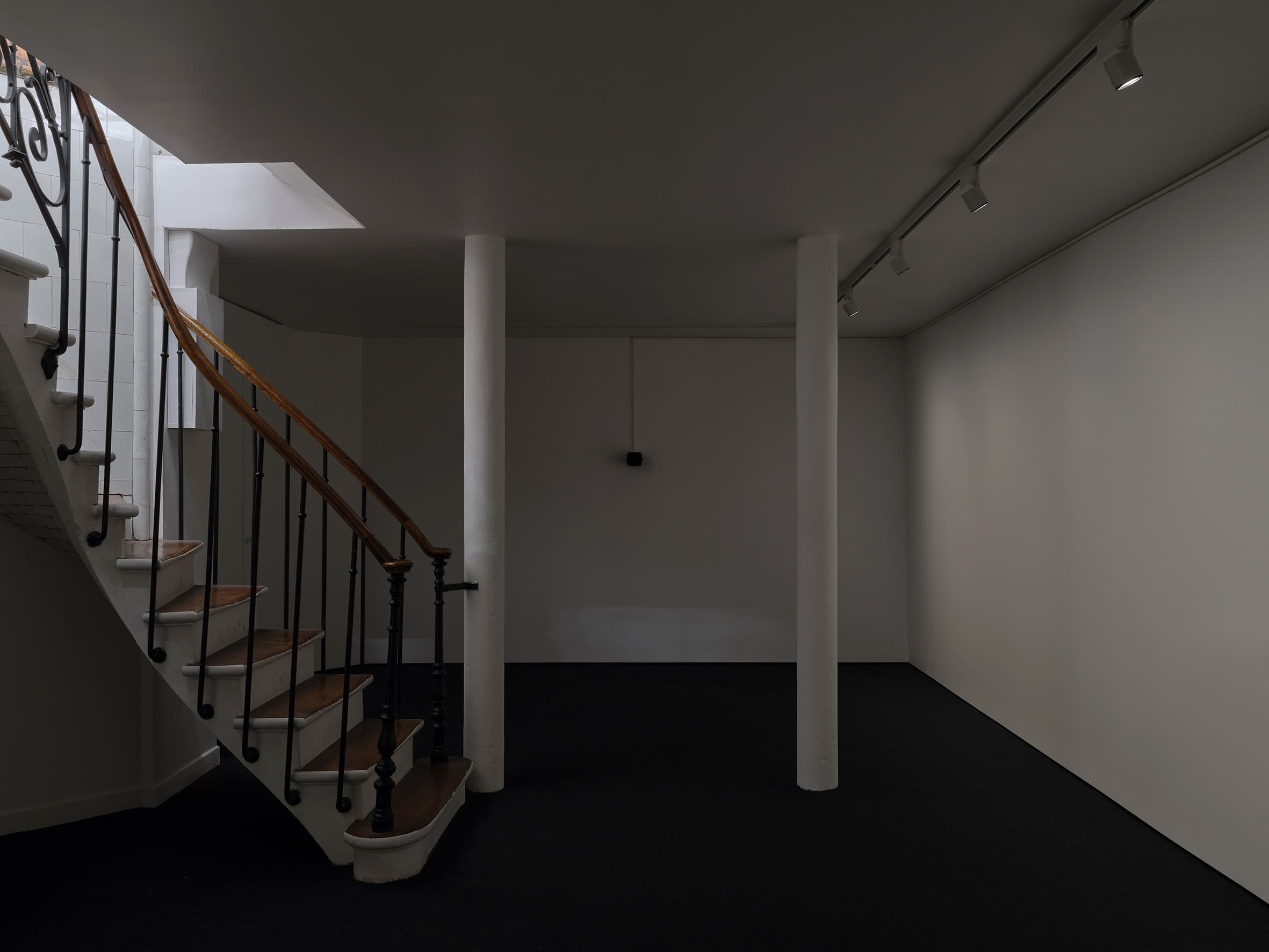
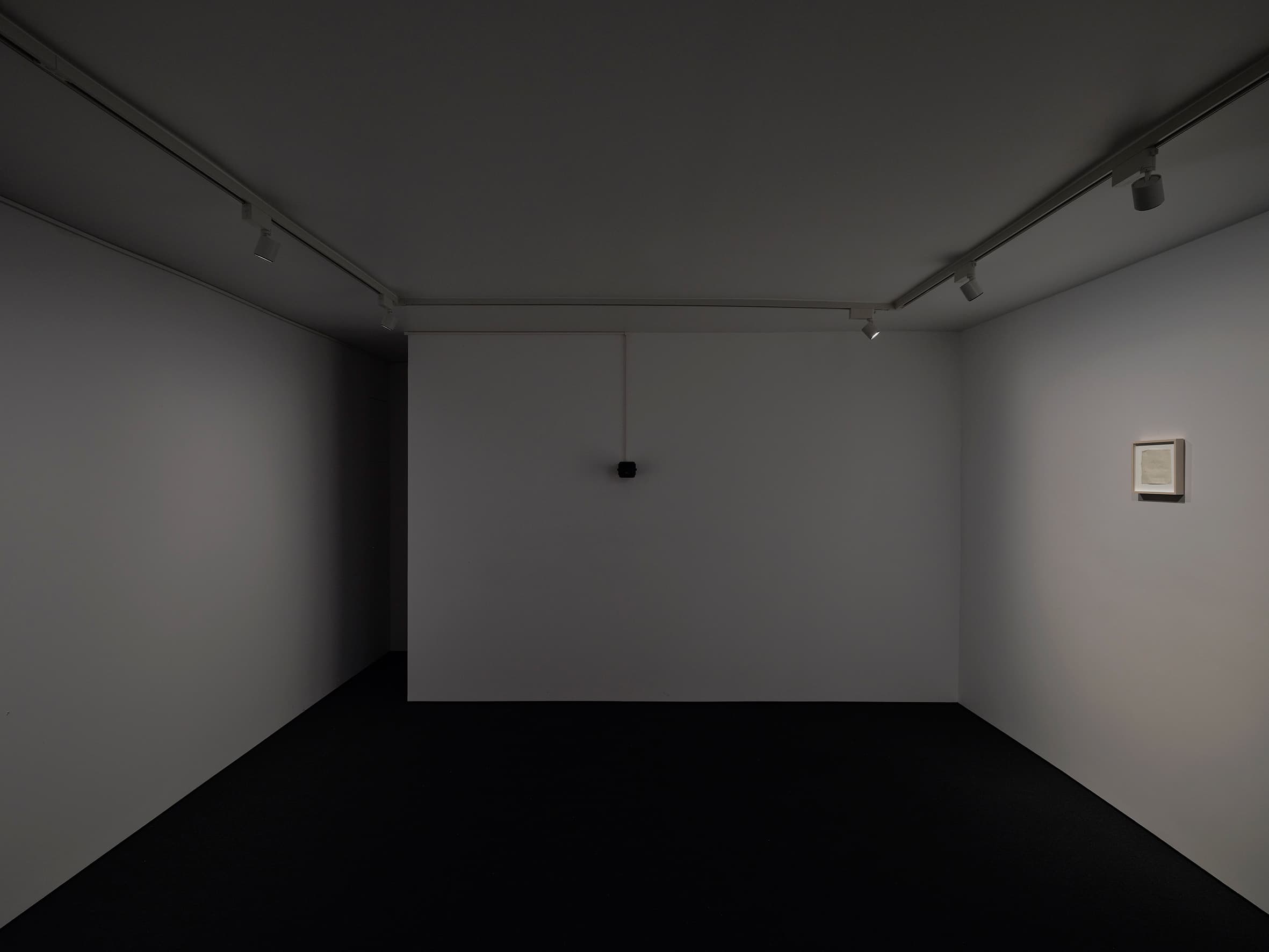
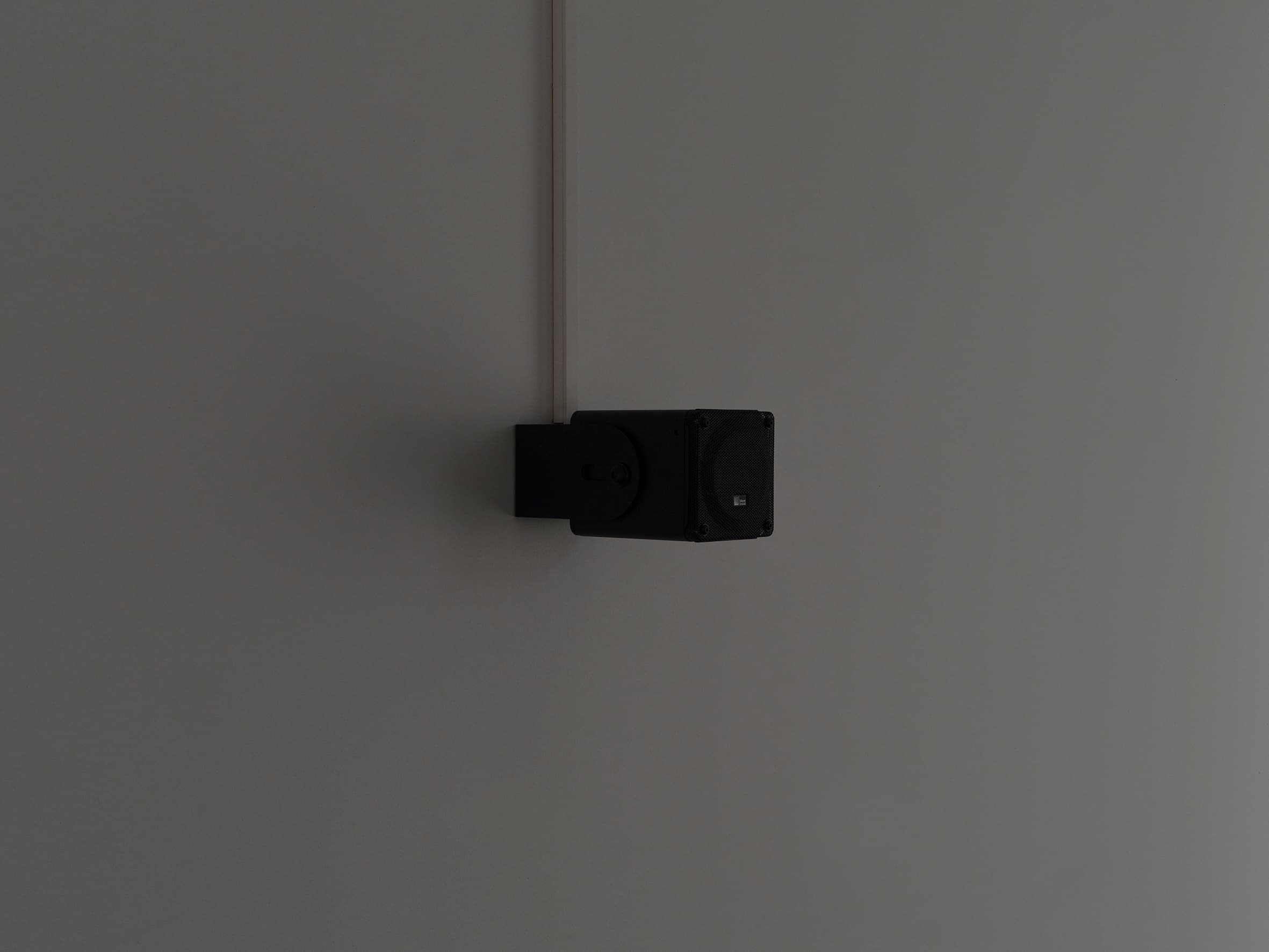
Pierre Allain
Coda, 2026
loudspeaker system, sound
07:00:00
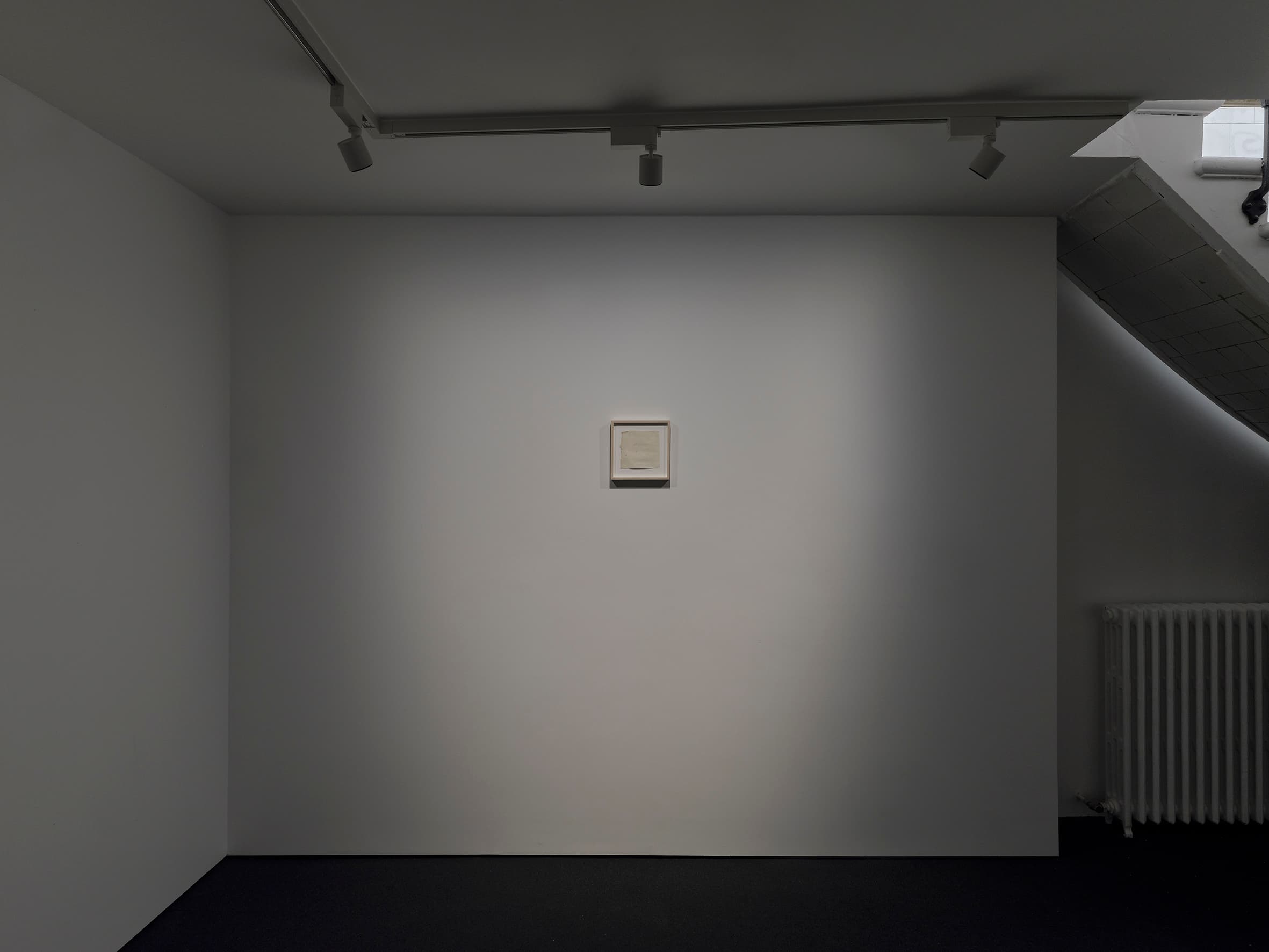
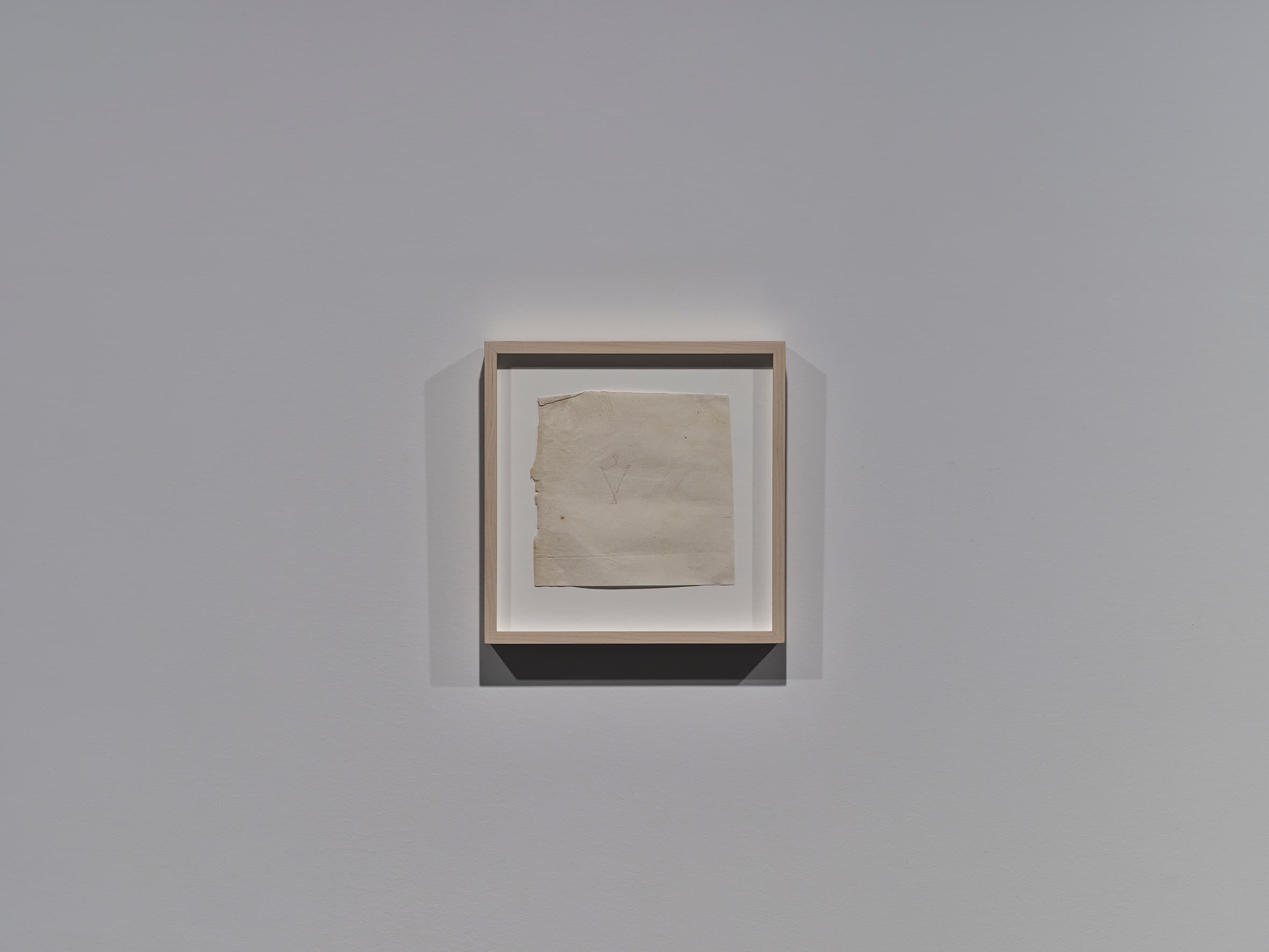
Léonie Guyer
Untitled, FR-47, 2016
pencil and colored pencil on 18th-19h century French paper
14.9 x 15.2 cm, 22.3 x 22.3 cm (framed)